

Case study July 2026
Milwaukee, WI

The City of Milwaukee operates approximately 87,000 streetlights, many connected to aging series circuits dating back to the early 1900s. These systems are notoriously fragile: a fault in one part of the circuit can cause an entire string of lights to go dark.
Since 2023, the City has been working to replace these “vintage” lights, along with others—about 54,000 in total—with LEDs to reduce energy use, costs, and carbon emissions. At the same time, its Public Works department has been exploring whether solar lighting could deliver even greater energy and cost savings.
But Milwaukee’s climate presented a challenge. Short winter days, cold temperatures, and extended cloudy periods all affect how much energy a solar system can collect and store. Before committing to a larger installation, they wanted to confirm the system could perform reliably under real local conditions.
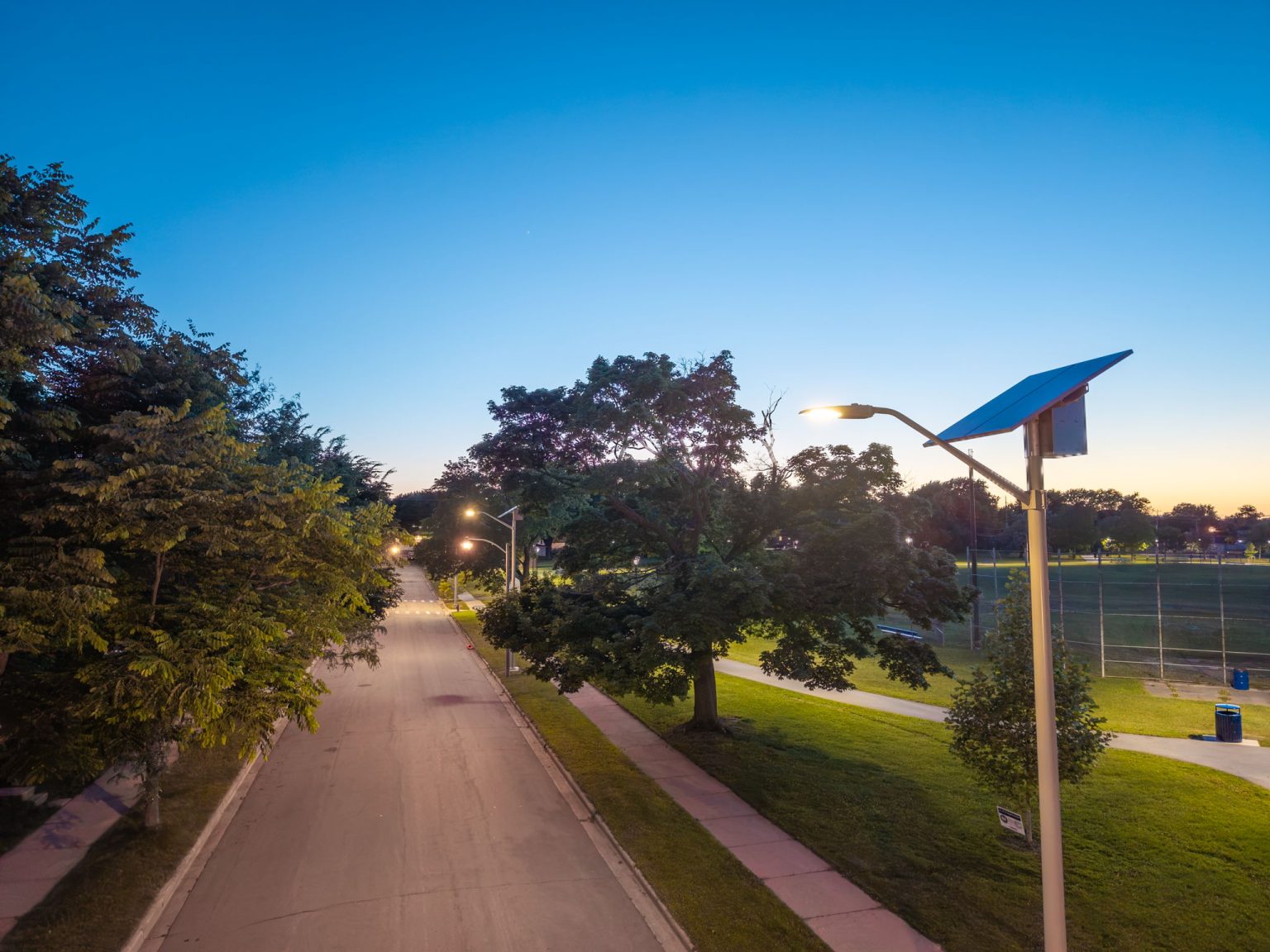
Public Works installed a single EverGen-M pilot system in June 2024 and monitored it through the following fall and winter. As a streetlight, the system needed to meet IES light-level targets from dusk ‘til dawn, with at least five days of autonomy to carry it through prolonged periods of dark, cloudy weather.
The department evaluated several solar lighting products but found that only the EverGen-M, with its cold-weather-resistant lead-acid battery, could meet both requirements. After a full winter of testing, the system delivered as designed.

With confidence growing, the City purchased 19 additional EverGen-M systems the following spring. They were installed around Emigh Playfield in November 2025, without the trenching and electrical work typically required for conventional street lighting.
Recently renovated, Emigh Playfield is an active community destination with athletic fields, courts, and walking paths, bordered by residential streets. The project gave the City an opportunity to evaluate solar lighting in a highly visible public setting while supporting safe nighttime activity in and around the park.
Each system operates dusk to dawn and uses an Autobahn cobra head fixture already common throughout the city’s grid-powered lighting network. The systems use either AGM or gel lead-acid batteries. Testing both battery types under the same conditions will help the City determine whether one is better suited to Milwaukee’s climate.

Milwaukee is still evaluating the technology, but early results are encouraging. After a successful winter pilot and a larger follow-up installation, the results suggest that properly sized solar lighting can be a viable option even where winter conditions put energy collection and storage to a serious test.
