

Educational 2 February 2026
Whir, pop—pause—slap… It’s hard to capture in words (shhhk? krrrsh?), but if you’ve ever spent time at a skate park, you know the sound. From ollies to kickflips, nollies to double kickflips, skate parks buzz with energy and skill. They’re where people of all ages gather to watch, learn, and test their limits on a rolling sheet of wood.
And lately, they’re busier than ever. Skateboarding’s popularity has surged, fueled by its Olympic debut, social media, and a broader rise in outdoor recreation since the pandemic. What was once a renegade sport of empty pools and DIY ramps has gone mainstream, inspiring cities to build design-forward skate parks that blend art, landscape, and community.
As more of these spaces take shape, a challenge keeps coming up: how to keep them safe and accessible after dark. Evenings offer cooler temperatures, flexible hours, and a unique atmosphere, but without lighting, the potential fades—fast. For parks departments looking to extend hours and improve safety, solar lighting offers a smart, sustainable way to keep the wheels turning.
Lighting a skate park isn’t as simple as flipping a switch or clapping your hands. Unless the park is already connected to the grid, bringing power usually means trenching, often through concrete or landscaping. That adds time, cost, and access issues during installation, turning a simple lighting project into a major construction job (and sometimes leading cities to table lighting altogether).
And getting the lights in place is only the beginning. Once installed, grid-tied systems continue to rack up bills—especially at parks that keep the lights on all night or through long winter evenings. Add in periodic maintenance, rising utility rates, and the all-too-common problem of copper wire theft, and traditional lighting can quickly end up consuming a huge chunk of an annual parks budget.
In short, traditional lighting often turns a simple goal—keeping a park safe and usable after dark—into a complex, costly, and drawn-out project. But it doesn’t have to!

Modern solar lighting systems like Sol’s do things differently. Instead of cutting into concrete to connect to an overburdened, polluting power source, each light is fully self-contained and independent, generating and storing all the energy it needs from the sun. Installation is quick, flexible, and trenchless, meaning a park can go from dark to lit in a matter of days or even hours.
Once in place, the system runs entirely off-grid, eliminating utility bills and keeping the lights on even during power outages. And because Sol customizes every system for its environment—meaning panels and batteries are tuned to latitude, temperature, and local weather—you’ll get reliable light year-round, even in cloudy coastal climates or northern cities with long winter nights.
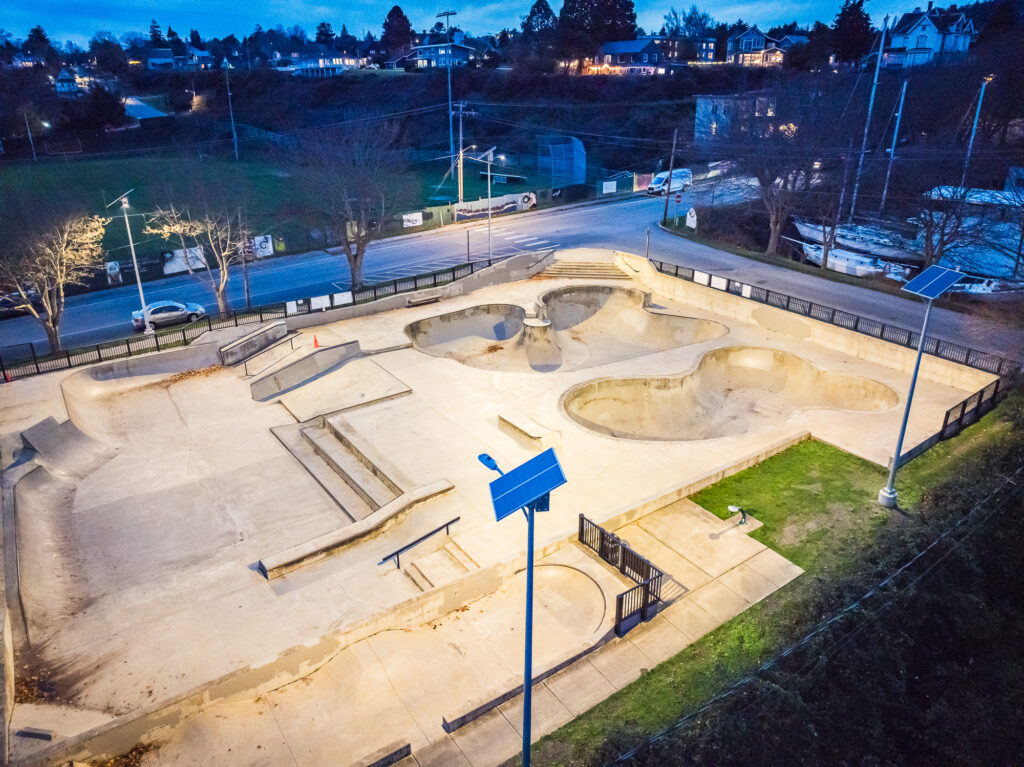
Case in point: Seamus Sims Skate Park in Port Townsend, Washington. Perched on the northern eastern tip of the Olympic Peninsula, it’s not exactly known for endless sunshine. Even so, the city chose solar lighting to extend hours and improve safety—and the systems have delivered. The EverGen-M systems provide bright, uniform light that the park inviting and skaters safe after dark, all without trenching or ongoing expenses.
As skateboarding continues to grow, reliable lighting is key to keeping parks safe, active, and welcoming after dark. Solar lighting offers a smarter, faster, and more affordable alternative to traditional systems—cutting installation time, energy costs, and environmental impact.
Whether you’re planning a new park or upgrading an existing one, Sol makes it easy to extend hours and improve safety, creating spaces communities can enjoy day and night.
