
Educational 15 January 2026
One of the many great things about solar lighting is how easy it is to install in places without electrical infrastructure. Remote intersection? Sure! New housing development? Absolutely. Pickleball court? Boat launch? Battery Energy Storage System? Check, check, and… check.
But what about places that already have lighting systems—places where foundations have been poured, poles erected, and electrical connections made? As these systems age and owners look to replace them (and save money, reduce maintenance, and advance sustainability), converting to solar is an attractive solution.
Unfortunately, switching conventional lights to solar isn’t as simple as unplugging them from the grid and into a solar panel. (Sorry.) Retrofitting requires careful evaluation and planning, considering factors like weight and EPA, fixture compatibility, solar insolation, and shading.
Sound complex? It can be. But a trusted solar advisor (that’s us!) can guide you through the process and determine if retrofitting is right for your project. Here are some of the things we consider.
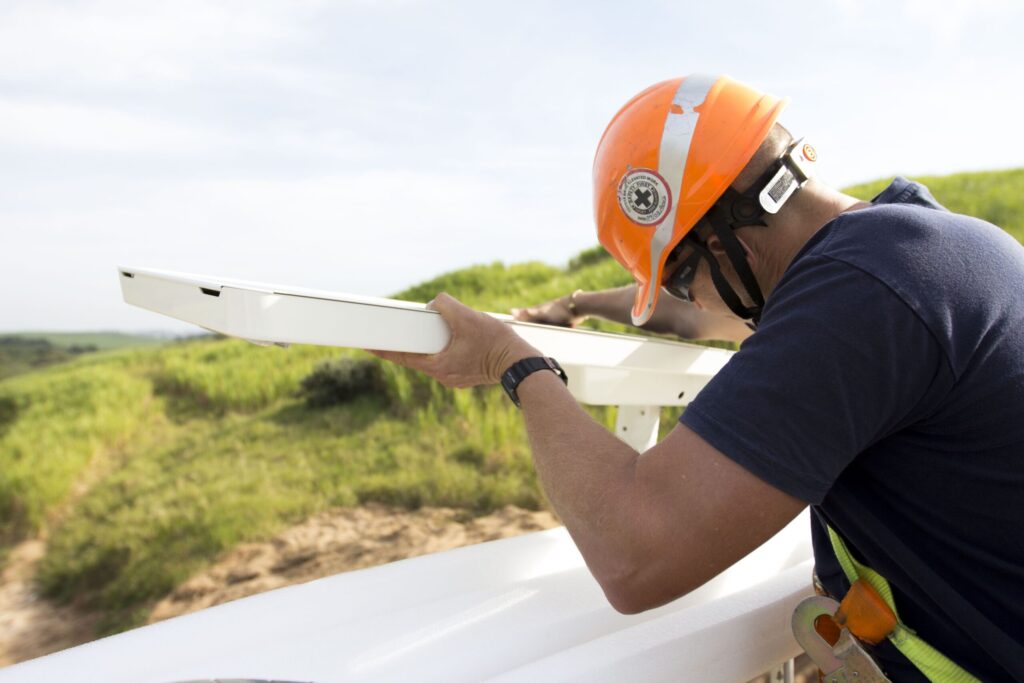
The first thing to do is figure out whether your existing pole (and arm, if applicable) can support the added weight of a solar lighting system. This will depend on the solar system you’re considering, but a beefy battery and broad solar array will add significant weight and wind resistance to your pole.
In the industry, we use EPA (Effective Projected Area) to express the system’s surface area and the resistance it creates against the wind. A small, low-profile system (like our iSSL Series) will have a lower EPA than a larger system (like our UP or EverGen Series).
Pole manufacturers typically list maximum weight and EPA for different pole heights on their spec sheets—these should not be ignored! If the system’s weight or EPA exceeds the pole’s limit for your location, it will need to be replaced with a more robust model.
There’s also the condition of the existing infrastructure to consider. Even if a pole’s specifications indicate it can support the added load, corrosion, damage, or issues with the foundation and anchor bolts could affect its suitability. A structural engineer can assess whether the existing setup is safe to reuse.
Conventional lights are designed to run on AC power (alternating current) from the grid. Solar lighting systems, however, operate on DC power (direct current) generated by solar panels and stored in batteries. Because they use different types of electricity, you cannot plug a standard AC light fixture directly into a solar DC system.
Consequently, retrofitting an existing system will require replacing your fixtures with models explicitly designed for solar. There are plenty to choose from, including potentially a solar-powered version of your existing AC fixture. Sol’s systems are compatible with a variety of Acuity fixtures, from cobra heads for roadways to decorative post-tops and pendants for parks and pathways.
It might seem obvious, but it’s easy to overlook: solar lights need direct sunlight, unobstructed by trees, buildings, or other structures. That beautiful park with mature oak trees? Perfect for picnickers; not so great for solar lighting. But a collector road with a grassy boulevard and excellent sun exposure? That’s the stuff successful solar lighting installations are made of.
If your pole location doesn’t get enough direct sunlight, don’t worry—you still have options. Simple adjustments like trimming branches or adjusting the tilt of the solar panel can sometimes solve the problem. In other cases, relocating the pole or installing a new one in a sunnier location is your best bet.
>> We provide a customized report for every project that proves reliable, year-round operation at your location.
Before undertaking a retrofit, you’ll need to assess your lighting needs. How bright does the light need to be, and for how long? Properly-sized solar lighting systems excel at providing reliable illumination, including for applications that require dusk-to-dawn lighting. Still, there are limits to the light levels solar systems can achieve and the duration they can sustain them.
Think of your solar light as a bank account—you can only withdraw what you’ve deposited during the day. The brighter your light burns and the longer it runs, the more energy you’ll need to store. While high-power systems like ours are incredibly efficient, there’s still a ceiling to how much energy they can collect and store. For projects requiring very high output or round-the-clock operation (especially those at high latitudes), a solar retrofit might not be the best choice.
While retrofitting lights to solar isn’t as simple as rigging up some solar panels and unplugging from the grid, converting to solar can be a smart investment when conditions are right. The key is carefully evaluating your existing infrastructure, location, and lighting needs. Our team is always available to answer questions and provide guidance on whether retrofitting is right for your project.
