

Case study April 2026
Elkhart, Indiana
UP2
When the City of Elkhart needed to light a new multi-use path without tearing up finished pavement, solar stepped up—and saved money.
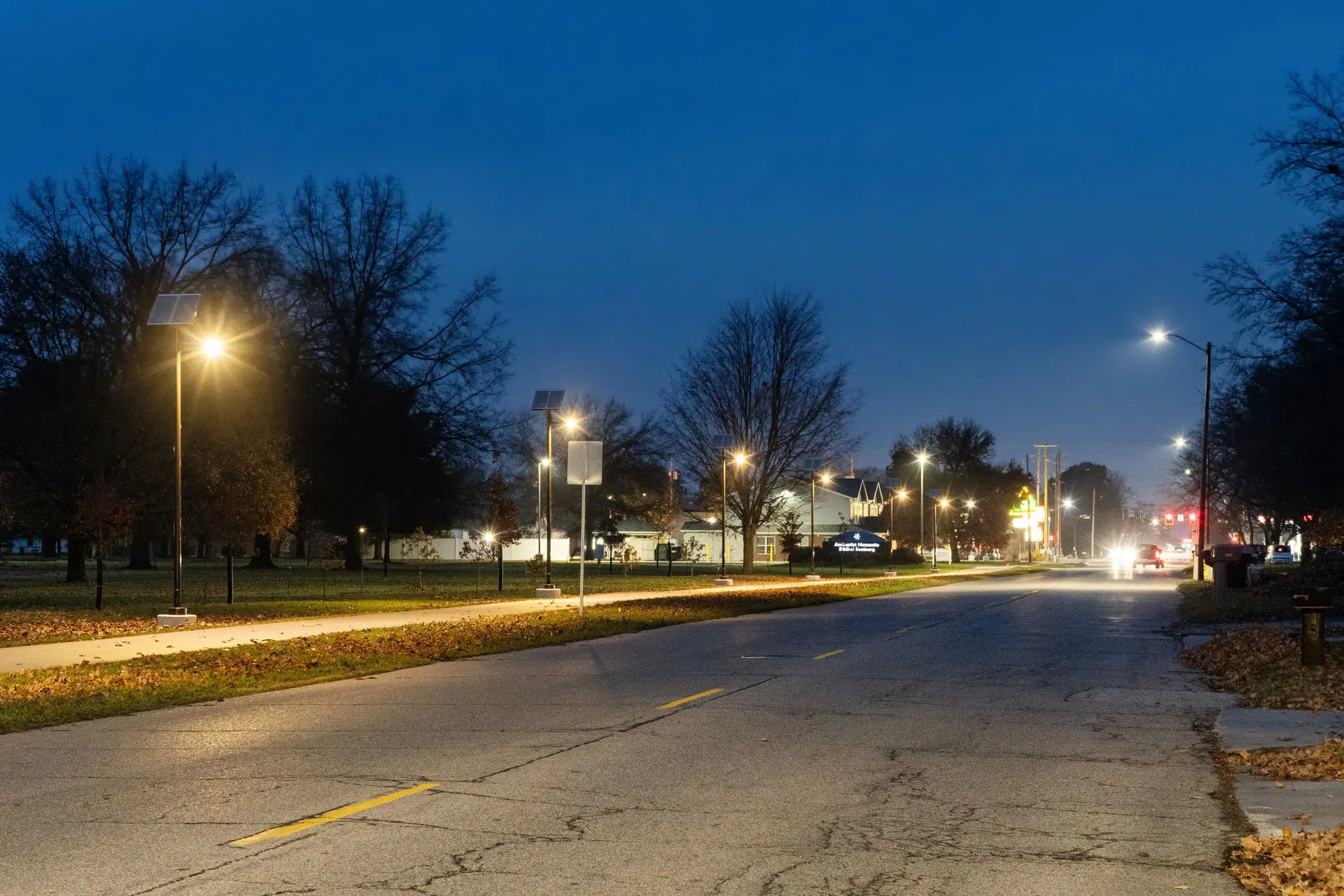

Elkhart, Indiana sits at the heart of a manufacturing region that draws tens of thousands of workers across county and state lines each day. But for residents on the south side of the city—many of whom don’t own cars—getting to schools, jobs, and community services meant navigating corridors that weren’t built with them in mind.
That gap is exactly what the Benham Avenue multi-use path was designed to close. The three-quarter-mile asphalt path creates key connections between south-side neighborhoods and businesses at a recently revitalized commercial center, while providing safer crossings for students who had previously relied on a grass walking path that left cyclists and people with mobility challenges unsupported.

The project was built under the ASPIRE Elkhart initiative, the city’s ambitious program of infrastructure and quality-of-life investments. For Assistant City Engineer Jeffrey Schaffer, the path reflects a broader philosophy. “The goal is really to connect as much of the city to downtown, and also to workplaces and commercial places as well,” he said. “You should be able to get to those freely and easily without a vehicle.”
Roadway lighting already lined much of the corridor, but it was designed for drivers—not pedestrians and cyclists travelling during early morning and evening hours. Filling the gaps with traditional lighting would have meant trenching through finished pavement: disruptive, expensive, and out of proportion with an otherwise straightforward project.

After carefully weighing its options, the City selected 15 of Sol’s UP2 solar lights to illuminate the unlit sections. With no trenching or grid connection required, installation was minimally disruptive and required no ongoing utility costs. Motion sensors adjust light levels based on activity—increasing output when users are present and scaling back during quieter periods—a practical fit for a corridor that sees varied use throughout the day.

The ribbon-cutting took place in August 2024, connecting an estimated 1,600 residents to schools, businesses, and the broader city. For Schaffer, the project is a proof of concept. “We’re looking at these types of pathways all throughout our city,” he said. “We want to make sure that we’re making our city walkable and making our city clean from the standpoint of air quality, and a lot of it comes from creating pathways like this.” The Benham Avenue path has become the template for expanding Elkhart’s active transportation network, one corridor at a time.
